
Summary: yes—you can wear extensions with thin hair, but the right method, amount of hair, and application are incredibly important.
Extensions should never come at the expense of the health of your natural hair. My goal is to choose an extension method that gives you the fullness you want while putting as little unnecessary stress on your natural hair as possible. in certain cases, extensions can even help protect your hair from external stress like heat styling while it grows,
Why?
Thin hair doesn't automatically mean you can't wear extensions. What matters is the condition of your natural hair, how much hair you have available to support the extensions, and which method is appropriate for you.
Too much added hair, excessive tension, or an extension method that isn't suited to your hair can contribute to breakage and make fragile hair even more fragile.
That's why I don't use a one-size-fits-all approach. Sometimes the best option is wefts. Sometimes its k-tips. Sometimes it's a lighter installation, a topper, a blend of methods, or focusing on improving the condition of your natural hair first.
Who is this for?
This is for anyone with fine, thin, fragile, or low-density hair who is wondering whether extensions could work for them.
It's especially helpful if you've been told that your hair is “too thin” for extensions or you've had a bad experience with extensions in the past.
The Methods I Use:
K-Tip Extensions
K-tips can be a great option for some clients with thin hair because the extensions are attached in small individual sections, allowing me to customize the amount of added hair and where it is placed.
They aren't automatically the right choice for everyone, though. The amount of hair, length, and placement all need to be considered based on your natural hair.
Maintenance can vary from 4-6 weeks all the way up to 3 months depending on placement and your hairs growth pattern.
Weft Extensions
Wefts can work beautifully for clients with moderately low density hair, but the weight, placement and beadwork of the weft matter.
A weft that's too heavy for the amount of natural hair supporting it can create unnecessary tension. For the right client, a lighter installation with thoughtful placement can add fullness without overloading the natural hair.
Maintenance can vary from 4-8 weeks depending on your hair's growth pattern and personal preference.
Hair Toppers: Mesh & Mesh-less Integration
If your primary concern is visible scalp or hair that is too thin to cover extensions, a topper may be a better solution than the methods listed above or may need to be used in tandem with the methods above depending on your goals.
Instead of just adding length throughout the hair, a topper can provide coverage and fullness on the top of your head,
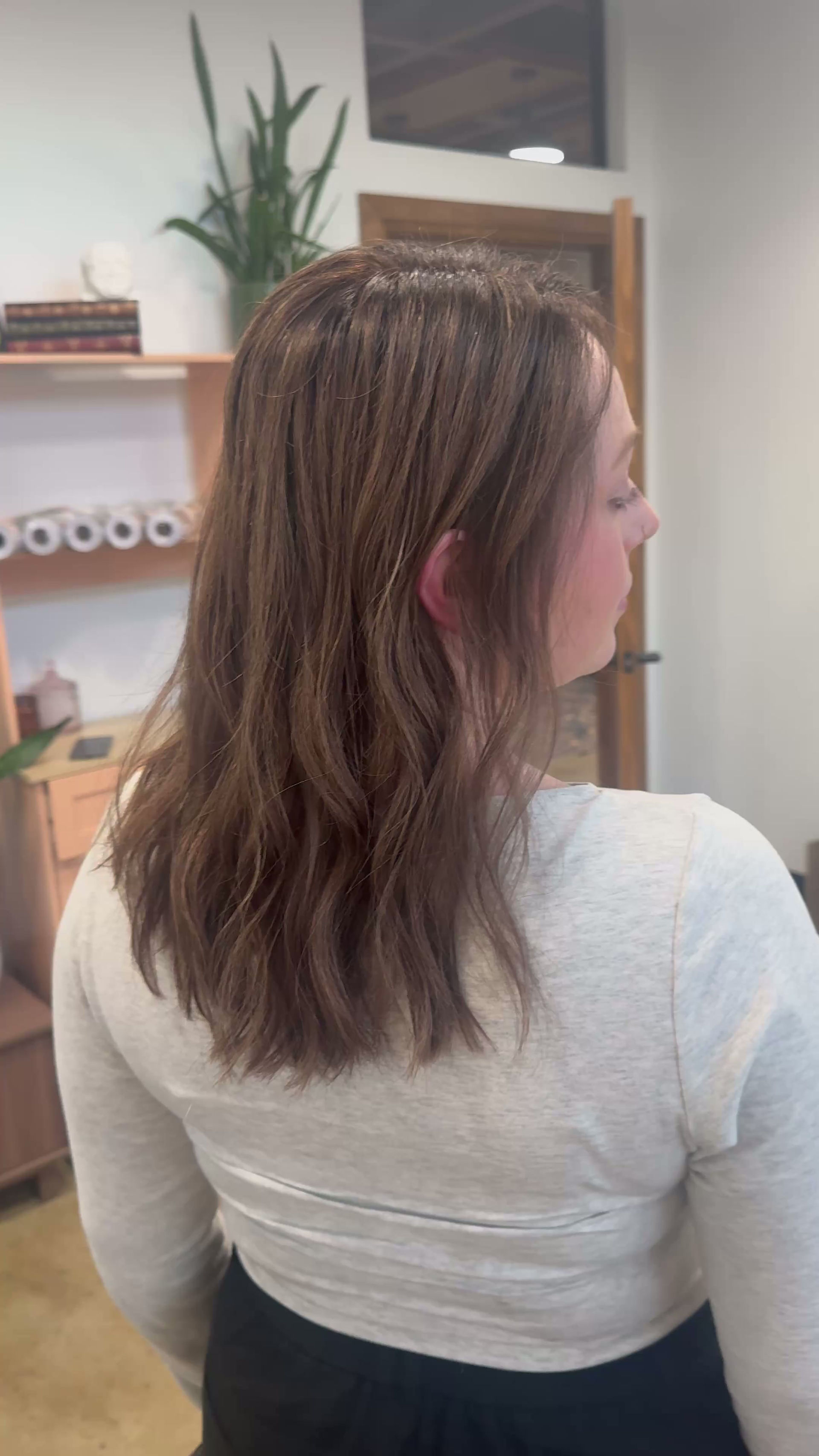
Side note: lots of people hear topper and thing of thick, heavy, wig-like hair peices. I use lightweight and breathable peices that are made to be worn with your natural hair through all your showers, sleep, and only need to be taken off and maintenanced every 3-4 weeks.
Replica Scalp - Coming February 2027
Great for anyone whose hair is too thin for methods listed above.
The Bottom Line
Thin hair doesn't automatically disqualify you from extensions.
It just means we need to be more intentional about the method, amount, placement, and condition of your natural hair.
The goal isn't simply to give you more hair. It's to give you fuller-looking hair without sacrificing the hair you already have.
Comments